From Research to Practice: cPAID Showcases AI Security at iCoMET 2026
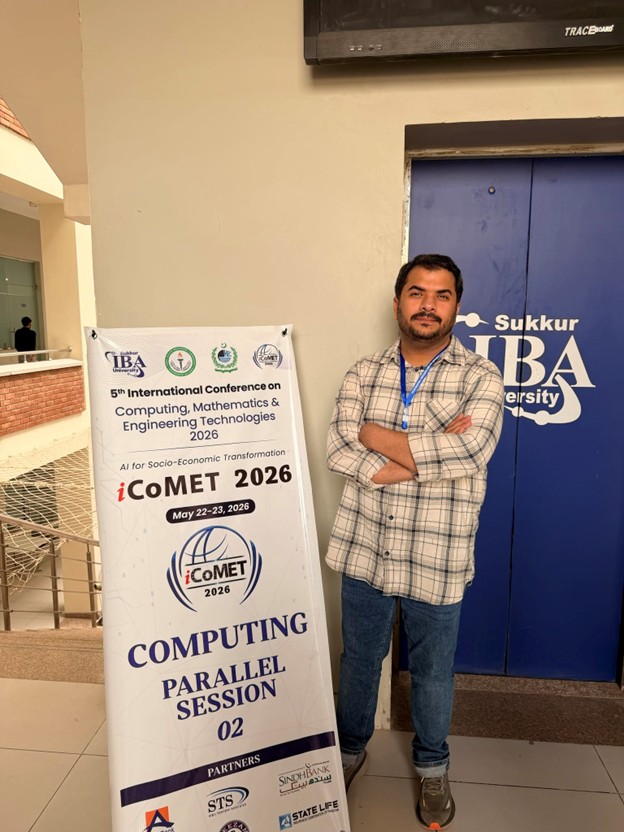
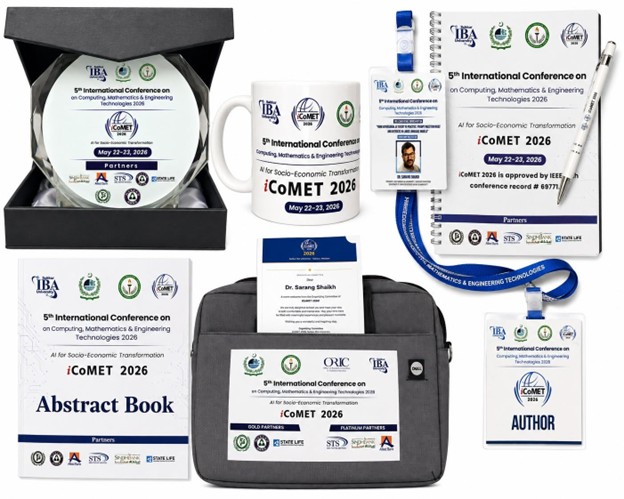
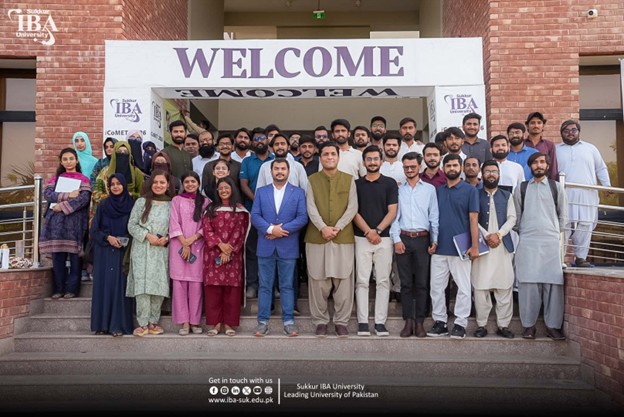
The cPAID project actively contributed to the 5th International Conference on Computing, Mathematics & Engineering Technologies (iCoMET 2026) through a series of scientific and educational activities aimed at strengthening awareness of trustworthy and secure Artificial Intelligence. Held at Sukkur IBA University, Pakistan, iCoMET 2026 brought together researchers, practitioners, industry representatives, and students from around the world to discuss emerging advances across computing, artificial intelligence, cybersecurity, and engineering. As part of this international forum, cPAID contributed by disseminating research outcomes, delivering hands-on training, and promoting discussion on adversarial threats targeting modern AI systems. These activities directly support cPAID’s mission of developing trustworthy, secure, and resilient AI technologies capable of operating safely in real-world environments.
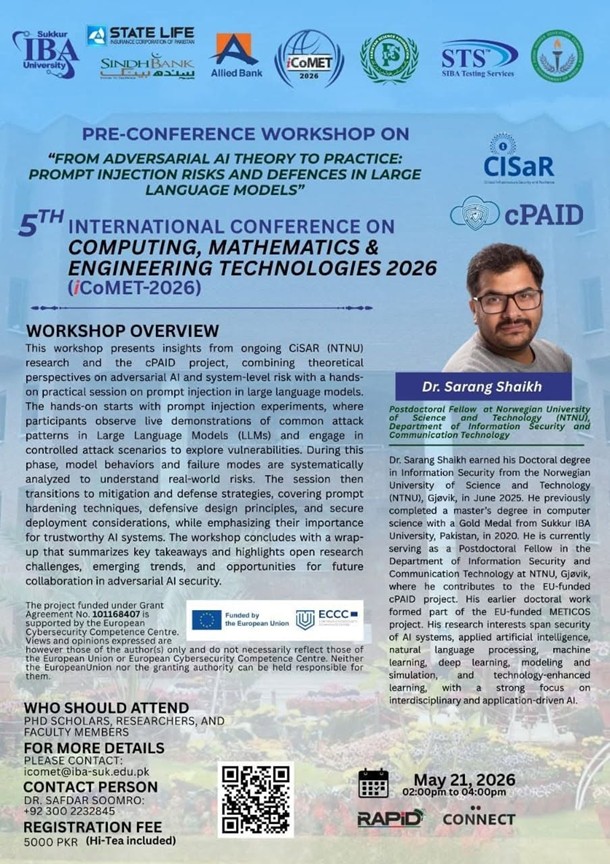
Pre-Conference Workshop on Prompt Injection Risks in Large Language Models
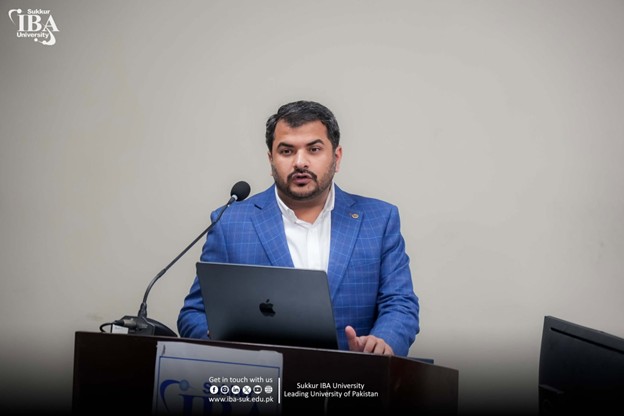
As part of the conference’s pre-conference programme, Dr. Sarang Shaikh, Postdoctoral Fellow at the Norwegian University of Science and Technology (NTNU), facilitated an interactive workshop entitled: From Adversarial AI Theory to Practice: Prompt Injection Risks and Defences in Large Language Models. The workshop introduced participants to one of the fastest-growing security challenges affecting Generative AI and Large Language Models (LLMs): prompt injection attacks. Through a combination of theory, demonstrations, and practical discussions, participants explored:
- Emerging adversarial AI threats against LLMs
- Prompt injection and indirect prompt manipulation
- Defensive strategies and secure prompt engineering
- Practical recommendations for deploying trustworthy AI systems
The workshop generated engaging discussions among researchers, students, and practitioners, highlighting the increasing importance of integrating cybersecurity considerations into AI development from the earliest stages of system design.
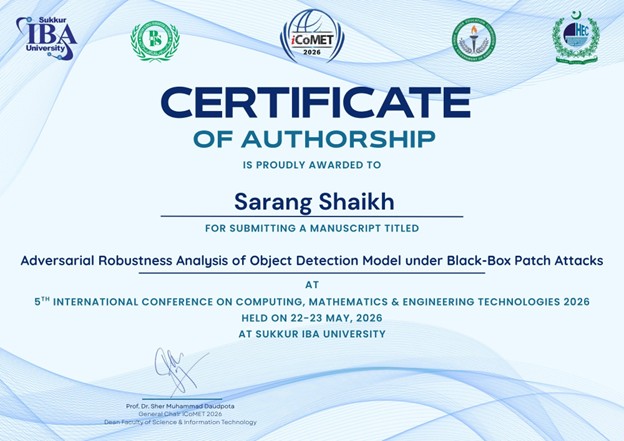
Presenting cPAID Research on Adversarial Robustness of AI Vision Systems
In addition to the workshop, Dr. Shaikh presented the research paper: Adversarial Robustness Analysis of Object Detection Model under Black-Box Patch Attacks co-authored with Dr. Ahmed Amro from NTNU. The research investigates how adversarial patch attacks affect modern object detection systems such as YOLO when deployed in safety-critical environments. Rather than focusing solely on digital perturbations, the work evaluates physically realizable black-box attacks that align with operational threat scenarios described by the MITRE ATLAS framework.
Looking Ahead
As AI systems become increasingly embedded within critical infrastructures, autonomous platforms, and decision-support systems, ensuring their resilience against adversarial manipulation remains one of the defining challenges for the research community. The cPAID project will continue to contribute through innovative research, practical security methodologies, and community engagement activities that promote trustworthy, secure, and resilient AI technologies across Europe and internationally. Participation in events such as iCoMET 2026 represents an important step towards translating cutting-edge cybersecurity research into practical knowledge that benefits researchers, industry, policymakers, and society.