

Systems and platforms empowered by AI solutions are becoming increasingly popular in industry domains, which allow for the efficient solving of complex problems. One example where AI algorithms perform very efficiently is video analytics with object recognition. The growing use of AI in image processing also brings threats in the form of various attack techniques used to deceive these systems. It needs the development of resilient solutions against different types of attacks without impact on the effectiveness of the AI system.
Orange Poland role
As a major telecommunications operator, Orange plays a significant role in delivering systems where secure and reliable communication between individual components is of utmost importance. The ability to ensure communication coverage in the areas where these systems operate is also crucial. In the cPAID project, Orange’s main role is to prepare the network and system architecture between the components of the developed platform, provide a networking environment to meet specified requirements, and demonstrate the solution in a real scenario based on forest fire detection (Pilot 2).
As part of the cPAID project, several pilot deployments have been envisioned for platform capabilities demonstration. One of these scenarios, in which Orange actively participates, is wild forest fire detection. The protection is based on monitoring landscapes by drones (CAFA Tech UAV), which continuously transmit video streams and other environmental parameters to data centers. In these centers, an AI system analyses the images for fire recognition, based on which appropriate preventive actions to neutralise detected fires are taken. A key element of this processing is properly designed and secured AI models.
The Future of AI Security
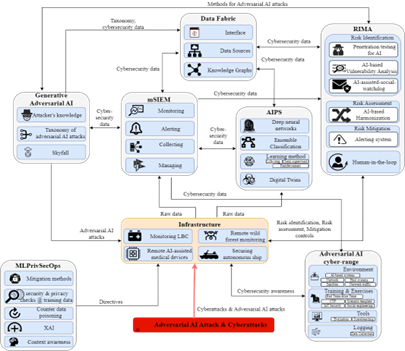
The quality of developed models significantly impacts the effectiveness of the AI systems. Therefore, a crucial aspect is the continuous ability to verify and enhance the quality of the applied AI models. This can be achieved through ongoing development and fine-tuning of these models. High-quality training data, such as the provided images, plays a vital role in this process. In our wild forest fire detection use case to transmit images between drones and data centers, a telecommunications network (including 5G) is required to ensure secure connectivity over large areas. AI systems are continuously evolving, including image analysis, but new malicious attack techniques are also being developed, aimed at deceiving AI systems. These types of attacks are known as adversarial attacks. The cPAID project is working on the solution for protection against such attacks (see Figure 1) through continuous analysis of system performance, automatic detection of new types of attacks (including those based on AI techniques), and vulnerability testing of operational systems to enhance their robustness. The project fosters building the knowledge for effective testing methods to protect systems against security vulnerabilities. As a result, it will enable the continuous advancement of secure service platforms.
In the evolving industry areas with increasingly applied AI solutions, the security of system operations and data protection is a critical factor. Detecting known attacks and securing against them is no longer sufficient. Continuous analysis of system behaviors is necessary to detect new attack techniques. The cPAID project is devoted to building such solutions (see Figure 1), and the industrial and operational expertise from Orange as a network and services operator will be a valuable contribution in the design process of the platform.

Funded by the European Union. Views and opinions expressed are however those of the author(s) only and do not necessarily reflect those of the European Union or ECCC. Neither the European Union nor the granting authority can be held responsible for them.